As AI assistants move closer to transactions, fashion and luxury retailers face a new challenge: maintaining control over customer relationships, product visibility and the economics of digital commerce.

Fashion brands have spent years investing in direct-to-consumer channels, building e-commerce platforms, collecting customer insights and developing loyalty programmes. Now, a new intermediary is emerging between brands and their customers: artificial intelligence.
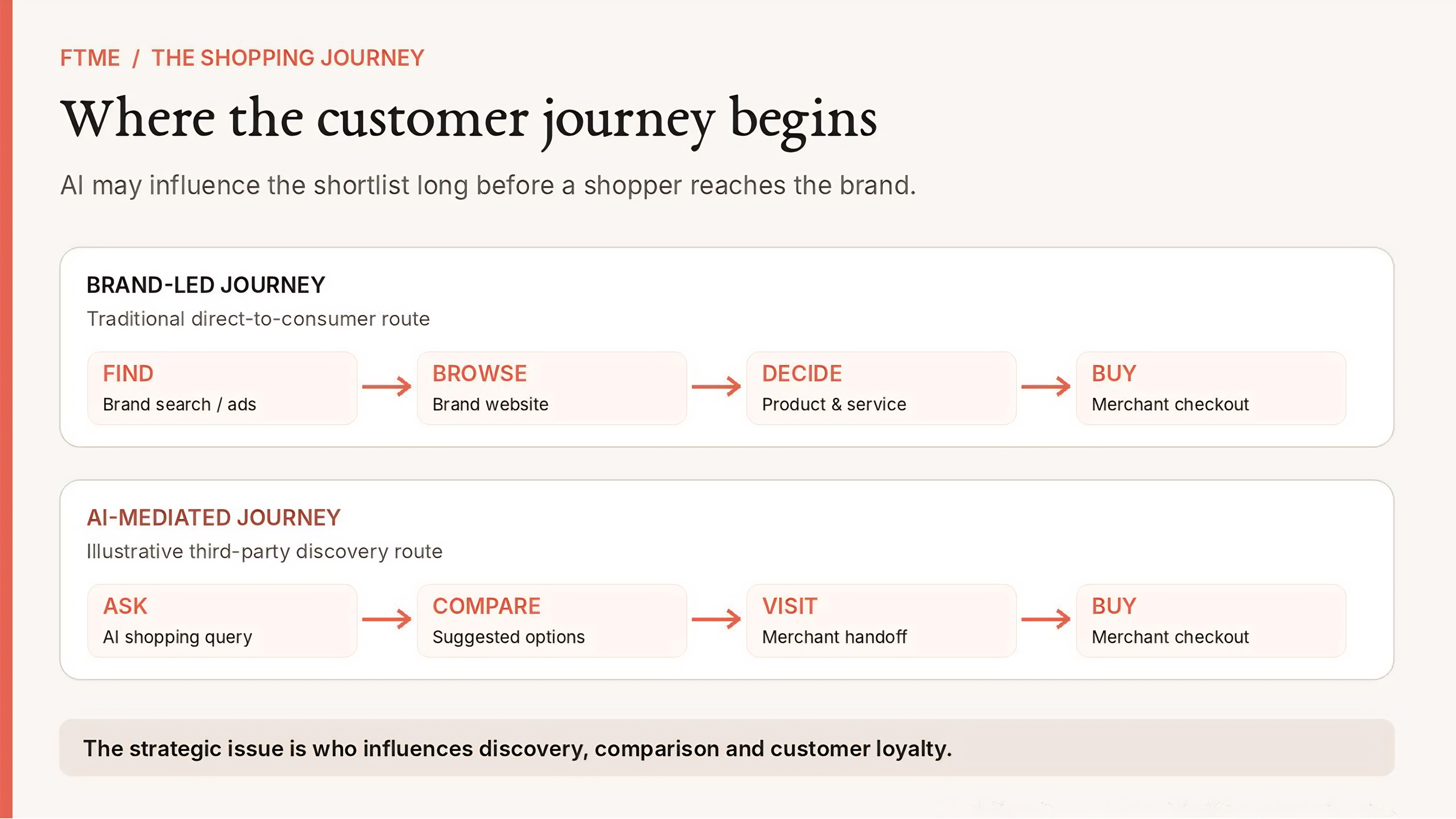
AI assistants are moving beyond recommending products. They can help shoppers compare options, identify merchants and move towards completing purchases, potentially reducing the need to navigate traditional retail websites.
For fashion and luxury businesses in the GCC, this raises a strategic question. If an AI assistant becomes the starting point for shopping, how much of the customer relationship will remain with the brand?
From Product Discovery to Purchasing
In September 2025, OpenAI introduced Instant Checkout in ChatGPT, initially allowing eligible US customers to purchase products from participating Etsy sellers without leaving the conversation. Developed around the Agentic Commerce Protocol with Stripe, the initiative demonstrated how AI-assisted discovery could extend into transactions.
OpenAI has since shifted its approach towards merchant-owned checkout, where customers discover and compare products through ChatGPT before completing purchases on retailers' own websites or apps.
This distinction matters. AI-assisted commerce does not necessarily mean autonomous purchasing. Customers may still select products, approve transactions and complete payments themselves.
But even without fully automated checkout, the commercial implications are significant.
When an AI assistant determines which products to recommend, which merchants to present and how alternatives are compared, it can influence purchasing decisions before customers reach a retailer's digital storefront.
The competition for customer attention may therefore begin outside the channels brands control.
Who Owns the Customer Relationship?
For years, fashion retailers have worked to reduce their dependence on third-party platforms.
Direct-to-consumer strategies promised greater control over customer data, brand presentation and profitability. Retailers invested in personalised recommendations, loyalty programmes and digital experiences designed to encourage repeat purchases.
Agentic commerce introduces a potential new dependency.
A customer may discover a product through ChatGPT, compare competing brands and proceed to checkout without engaging with much of the retailer's carefully designed digital experience.
The retailer may still fulfil the order, but the assistant could become the customer's preferred point of contact for future shopping decisions.
For luxury brands, the implications extend beyond conversion rates.
Clienteling, personal relationships and curated experiences remain important elements of luxury retail. An AI intermediary may improve convenience, but it cannot automatically reproduce the emotional and cultural dimensions that distinguish one luxury house from another.
The question is not whether brands should participate in AI-powered commerce. It is how they can benefit from new discovery and sales channels without surrendering the relationships that create long-term customer value.
Visibility Has a New Gatekeeper
Search engines, social platforms and online marketplaces already influence which products consumers discover. AI assistants add another layer, with the ability to interpret customer requests and present a smaller selection of recommendations.
For retailers, this could change the economics of digital visibility.
Traditional e-commerce strategies have focused on search rankings, advertising, social engagement and conversion optimisation. AI-mediated shopping introduces new considerations: whether product information is accessible, how recommendations are generated and which merchants are eligible to participate in transactions.
A retailer with strong brand recognition may still struggle to appear in relevant AI-generated recommendations if its product information is incomplete or difficult for external systems to interpret.
At the same time, smaller brands could potentially gain exposure when their products closely match a customer's request.
The commercial rules governing these interactions are still developing. Brands will need to understand how platforms select merchants, handle commercial relationships and communicate product information to customers.
What This Means for GCC Retailers
For retailers in the UAE and Saudi Arabia, agentic commerce remains an emerging opportunity rather than an established local sales channel.
Nevertheless, preparing for AI-mediated transactions involves decisions that go beyond introducing a chatbot.
Product catalogues, local inventory, currencies, delivery conditions and payment options must be reliable enough to support recommendations and potential transactions across different markets.
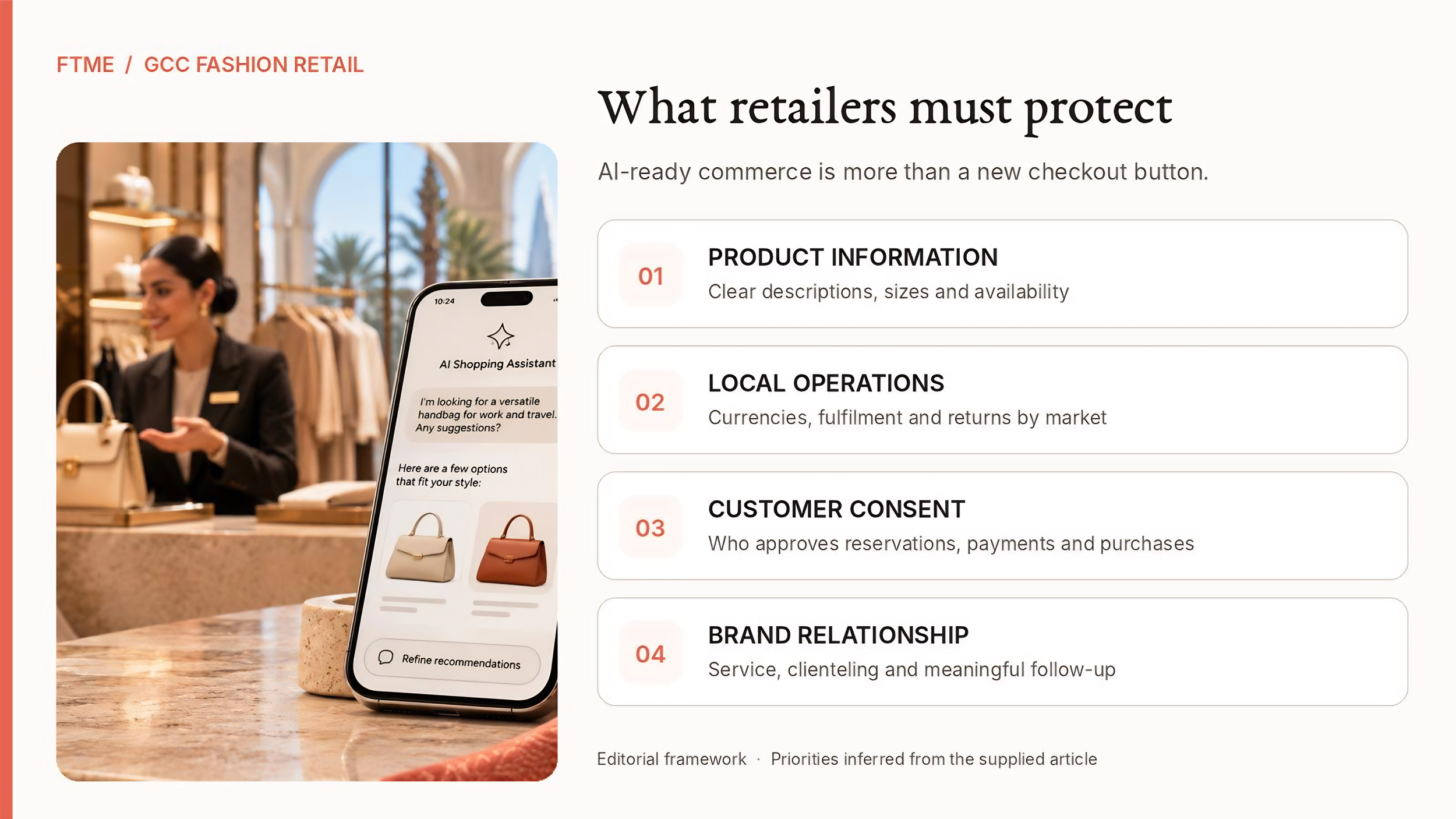
Retailers must also determine how much authority external systems should have. Finding a product is different from reserving inventory, selecting a payment method or authorising a purchase.
Clear boundaries around customer consent, transaction approval and accountability will become essential as shopping assistants gain more capabilities.
There is also a broader commercial consideration. If external AI platforms become important sources of customer acquisition, retailers will need to assess the costs, data access and dependencies associated with participation.
For luxury brands, the challenge is particularly delicate: making purchasing more convenient without reducing the brand experience to a transaction.
A New Balance of Power
Agentic commerce is unlikely to eliminate brand websites, boutiques or traditional retail channels. But it could change where purchasing decisions begin and which businesses influence them.
The opportunity for GCC retailers is to participate in AI-driven commerce while preserving the elements that make their brands distinctive: customer relationships, service, trust and experience.
As AI platforms move closer to the point of purchase, the central question is not simply whether retailers are technologically prepared.
It is whether they are commercially prepared for a world in which someone else's AI may become their customer's preferred shopping interface.