As AI assistants become a new starting point for shopping, luxury brands face a question that goes beyond technology: who controls how their products are discovered and presented?
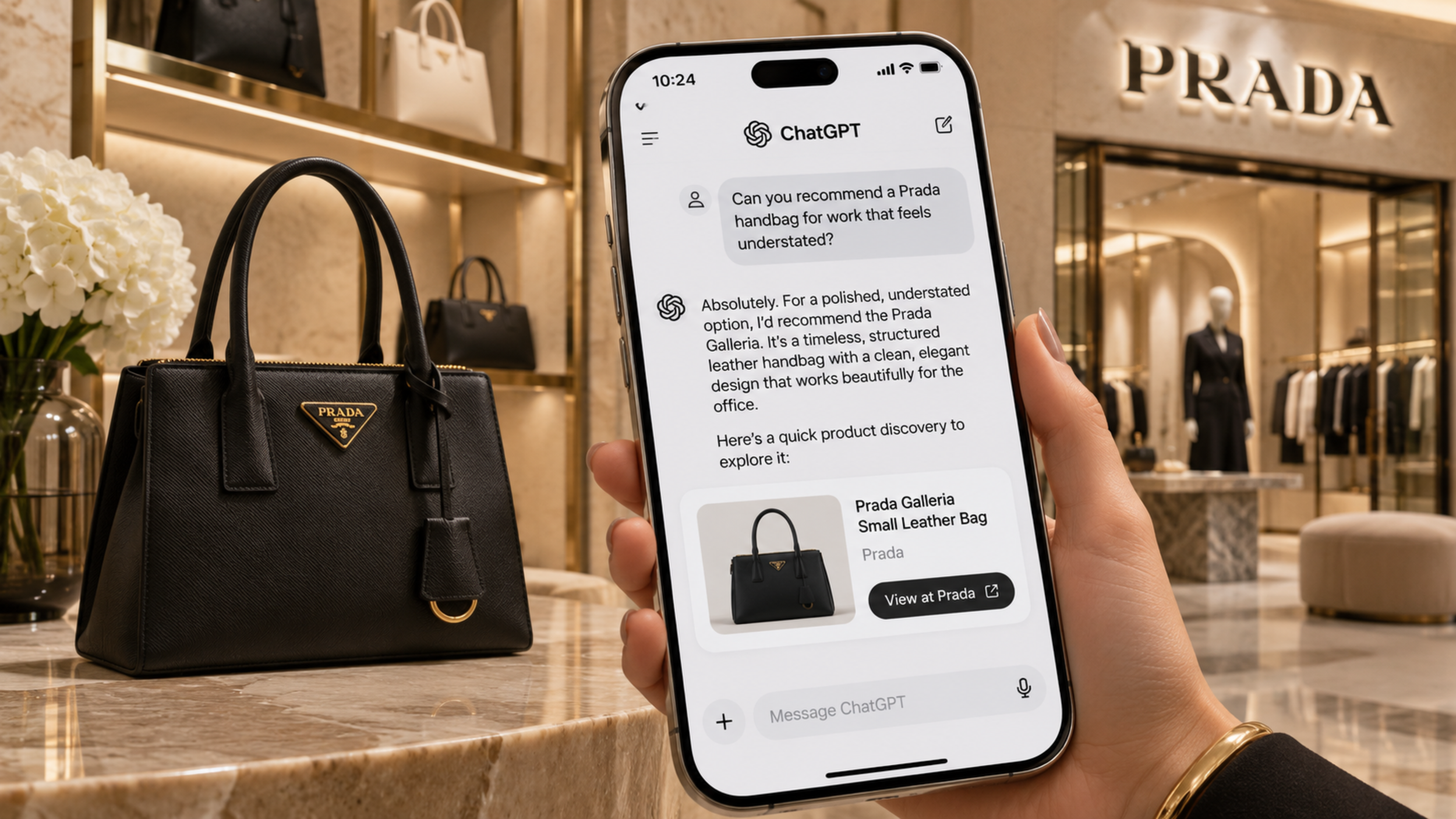
Illustrative image: editorial mockup showing Prada discovery within ChatGPT on a smartphone in a luxury retail setting. Original conceptual artwork, not official Prada imagery.
For decades, luxury brands have carefully controlled how customers discover their products, from flagship boutiques to meticulously designed websites. AI assistants are introducing a new point of entry, where the first product recommendation may come from a platform the brand does not own.
Prada is among the luxury houses exploring this shift.
In late October 2026, the Italian fashion house launched a ChatGPT experience developed with Accenture Song and support from DaVinci Commerce. The pilot allows customers to explore collections, discover products and find store information within an AI conversation.
Currently available in the US, UK and Italy, the experience has not yet launched in the GCC. But the implications extend beyond those markets.
A New Front Door to Luxury
Imagine a customer looking for a handbag for an upcoming business trip. Instead of browsing several luxury websites, she asks ChatGPT to recommend something understated, suitable for work and within her budget.
The assistant compares products, explains their features and suggests where to find them. The customer may eventually purchase through a brand's website or visit a boutique. But the initial discovery, comparison and potentially even the shortlist have already happened elsewhere.
This changes an important part of the relationship between luxury brands and their customers.
Traditionally, brands have invested heavily in shaping how their products are presented. Store architecture, campaign imagery, website design and editorial storytelling all contribute to how customers perceive value.
An AI assistant introduces another layer between the brand and the customer. It can interpret, summarise and compare products in ways the brand does not fully control.
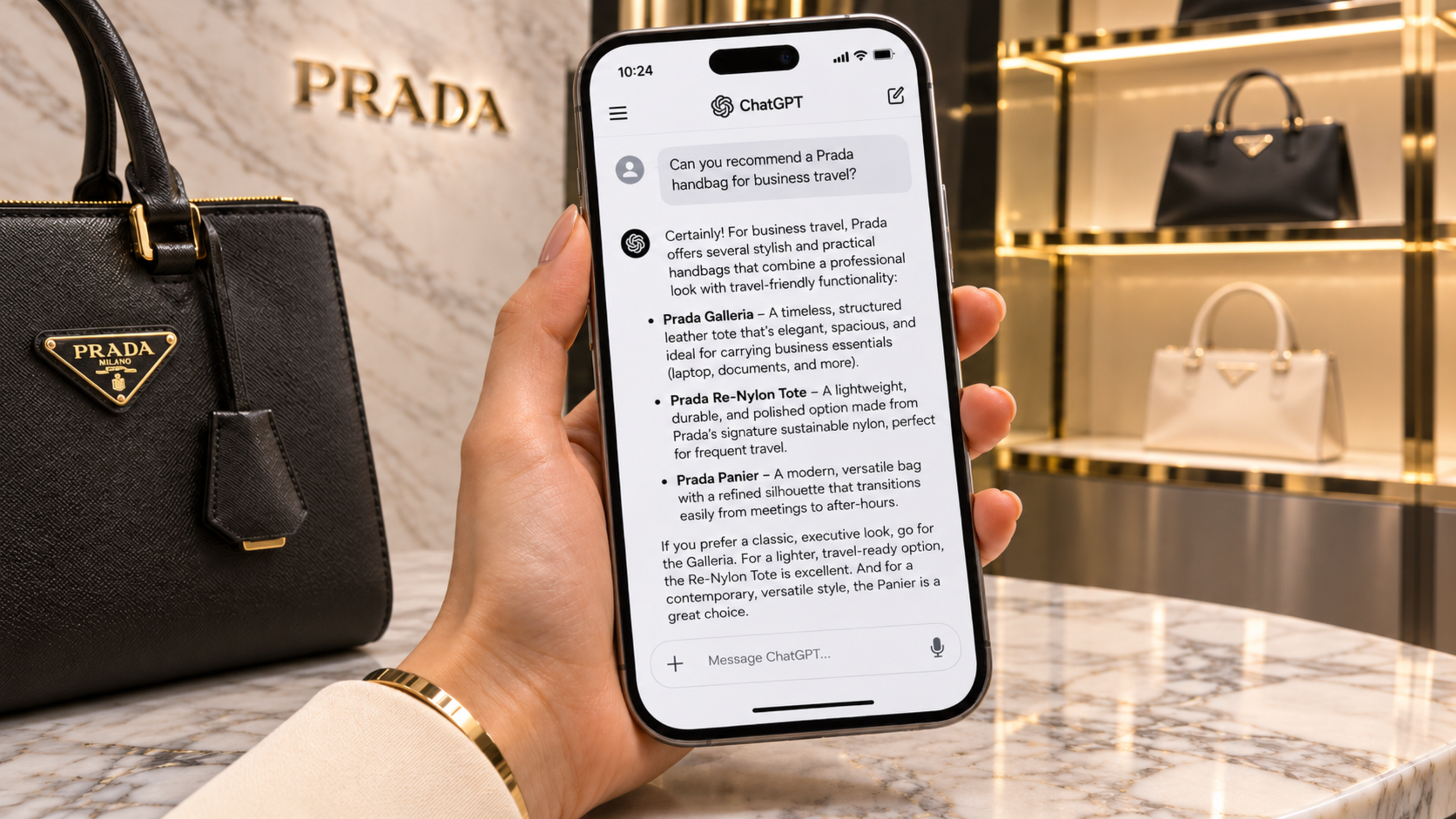
Illustrative ChatGPT conversation about Prada handbags.Original conceptual artwork, not official Prada imagery.
And luxury is not simply a collection of product attributes.
Two handbags may have similar dimensions, materials and prices while occupying entirely different positions in the customer's imagination. Craftsmanship, heritage, cultural relevance and desirability are considerably harder to communicate through standardised product descriptions.
Making products understandable to AI systems is necessary. But reducing them to easily comparable specifications risks overlooking the qualities that make luxury desirable in the first place.
Why the GCC Should Pay Attention
The Gulf presents an interesting market for conversational shopping.
Luxury customers across the UAE and Saudi Arabia navigate a retail environment combining international brands, local designers, physical boutiques, e-commerce and social commerce. Their expectations are also highly specific.
A customer in Riyadh may want to know whether an item is available locally, while a shopper in Dubai may be comparing international prices, delivery options or exclusive collections.
Language adds another dimension. AI assistants need to interpret preferences across English and Arabic while accounting for regional sizing, currencies and fulfilment requirements.
Consumers are already experimenting with AI as part of their shopping decisions. According to Tabby's 2026 survey of 20,999 shoppers in the UAE and Saudi Arabia, 43% use AI to help decide what to buy, yet only 30% trust its recommendations.
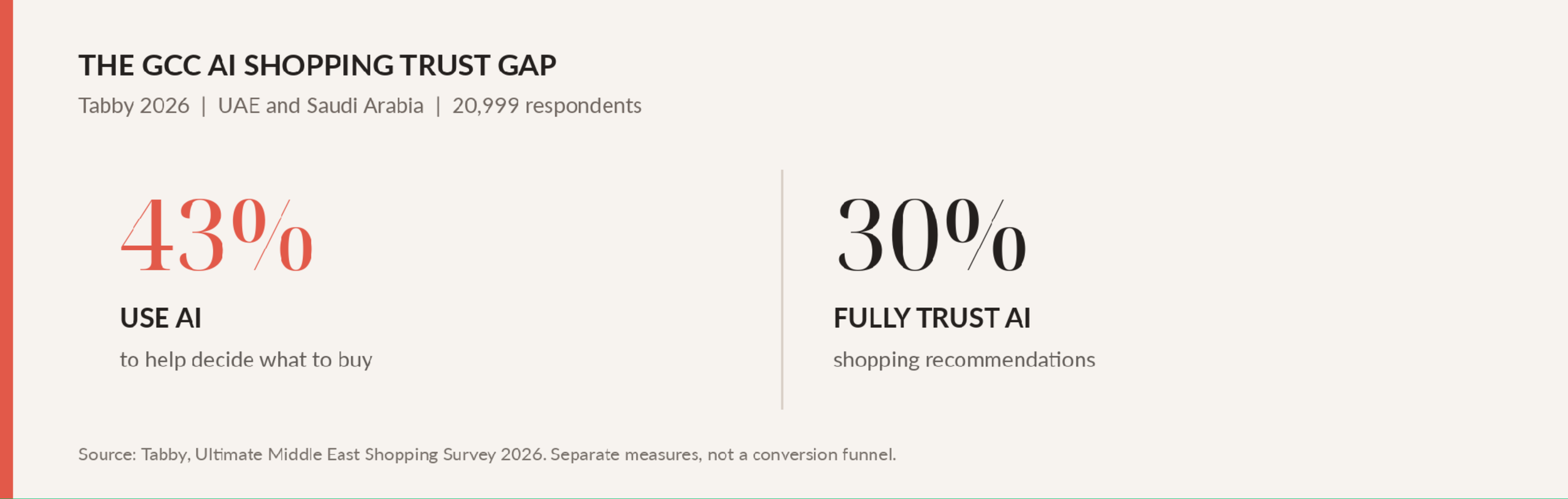
Survey measures are distinct: use of AI to help with shopping is not the same as full trust in recommendations. Source: Tabby, 2026.
The gap between adoption and trust matters.
Consumers may be willing to consult AI, but that does not mean they are prepared to rely on it without verification, particularly when purchasing expensive products.
For GCC brands, the immediate priority is not necessarily building another chatbot. It is understanding whether existing AI assistants can accurately find, interpret and recommend their products.
Incomplete descriptions, outdated inventory information or inconsistent delivery policies may prevent an otherwise suitable product from appearing in a recommendation. A brand can have the right product and still be overlooked because the information available to AI systems is insufficient.
Who Controls the Brand Story?
Prada's pilot demonstrates how conversational AI can support product discovery. It does not yet establish whether luxury customers are ready to delegate purchasing decisions to AI agents.
Choosing a handbag, confirming availability and authorising a payment remain different activities.
For now, the more immediate shift is happening earlier in the customer journey, when consumers form opinions, compare alternatives and decide which brands deserve their attention.
The strategic question is therefore not simply whether luxury brands should enter ChatGPT, but how they can maintain their identity when their products are increasingly interpreted by third-party systems.
Luxury brands have spent decades controlling how their stories are told. As discovery moves into AI conversations, the challenge is no longer simply being found. It is ensuring that what customers discover still reflects the brand.